Stop and Say Thanks
A few weeks ago, I wrote about my propensity to travel and my belief that a willingness to travel can be a superpower for founders. Recently, I had my superpower put to the test.
In the past two weeks, I flew to Columbia, Missouri for Capital Camp, an annual gathering of investors who focus on markets outside of the traditional coastal superpowers. From there, I travelled to San Francisco, where I stayed for 2 nights before flying to London (via Vancouver) and then on to Edinburgh to speak at Ecosystem Exchange. A few days later, it was all the way back.

Flying cross-country is a common affair for many people who travel for work. I myself used to do it quite frequently when I was an operator. But this trip was different.
My travel took place during the longest U.S. government shutdown in history — neither the air traffic controllers nor the TSA agents working at airports across the country were being paid at that time. In the midst of all that, the federal government instructed airlines to reduce the number of flights they were operating by 10%. Thousands of flights were cancelled or rescheduled the night before I was to fly from Columbia to SF, leaving travelers scrambling.
I was scheduled to fly to San Francisco via Denver, one of the busiest airports in the U.S. When we touched down (45 minutes late), the stress was palpable. A number of the passengers on our Embraer E175 were nervous about making our connections, but that was nothing compared to what I saw when I exited the plane. It was absolute chaos. People were sprinting back-and-forth trying to make their flights, yelling at each other and at airport and airline staff, and the entire place exuded a level of stress that I haven’t felt in an airport in a long while.

Despite this, each and every person I encountered working at the airport — including those who hadn’t received a paycheck in weeks — was professional and courteous. If anything, they were even more professional and courteous than usual, despite an onslaught of angry customers and challenges.
A few days later, I was set to fly to London via Vancouver. Once again, my initial flight was delayed — this time due to a last-minute aircraft change. There was plenty of time before my connection, so the only real impact was that my seat was changed (to one of those bulkhead seats where you can’t put things under the row in front of you). I don’t usually choose to sit in those rows, as I like to have easy access to my laptop bag, but it was far from a big deal. Or so I thought…
I settled into my seat and spent the next couple of hours polishing my slides for Edinburgh and putting the finishing touches on an investor dinner I’m hosting in December. Overall, a solidly productive flight.
After we touched down in Vancouver, I passed by the courteous and professional Air Canada crew as I deplaned, then the courteous and professional YVR staff as I navigated through the airport to the international terminal, and finally the courteous and professional staff at the airport lounge where I arrived to spend the next hour. I sat down ready to continue my work…
…only to discover that my laptop wasn’t in my bag.

Red alert!
Immediately, I knew what had happened. Normally, I place my laptop into my laptop bag and slide it under the seat in front of me before landing. In this case, I didn’t have access to my bag, so I put my laptop into the sleeve attached to the bulkhead…and promptly forgot it 🤦♂️.
I had less than an hour before my flight to London and immediately rushed to the airport staff to see if they could help. Unfortunately, I had already cleared customs, so there was no way for me to go back to the gate to get it myself — despite the fact that it was mere meters away from me.
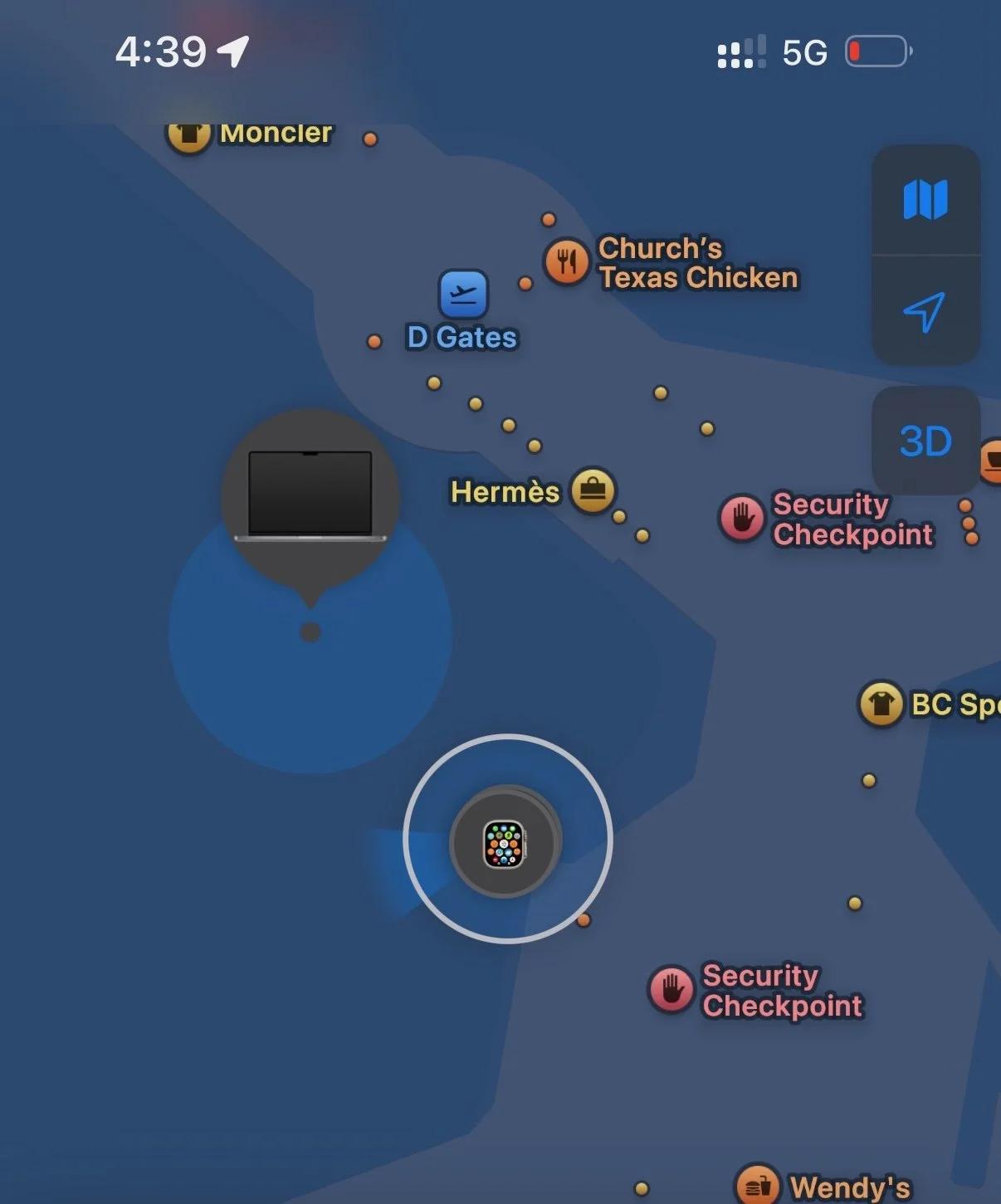
Noooooooooooo
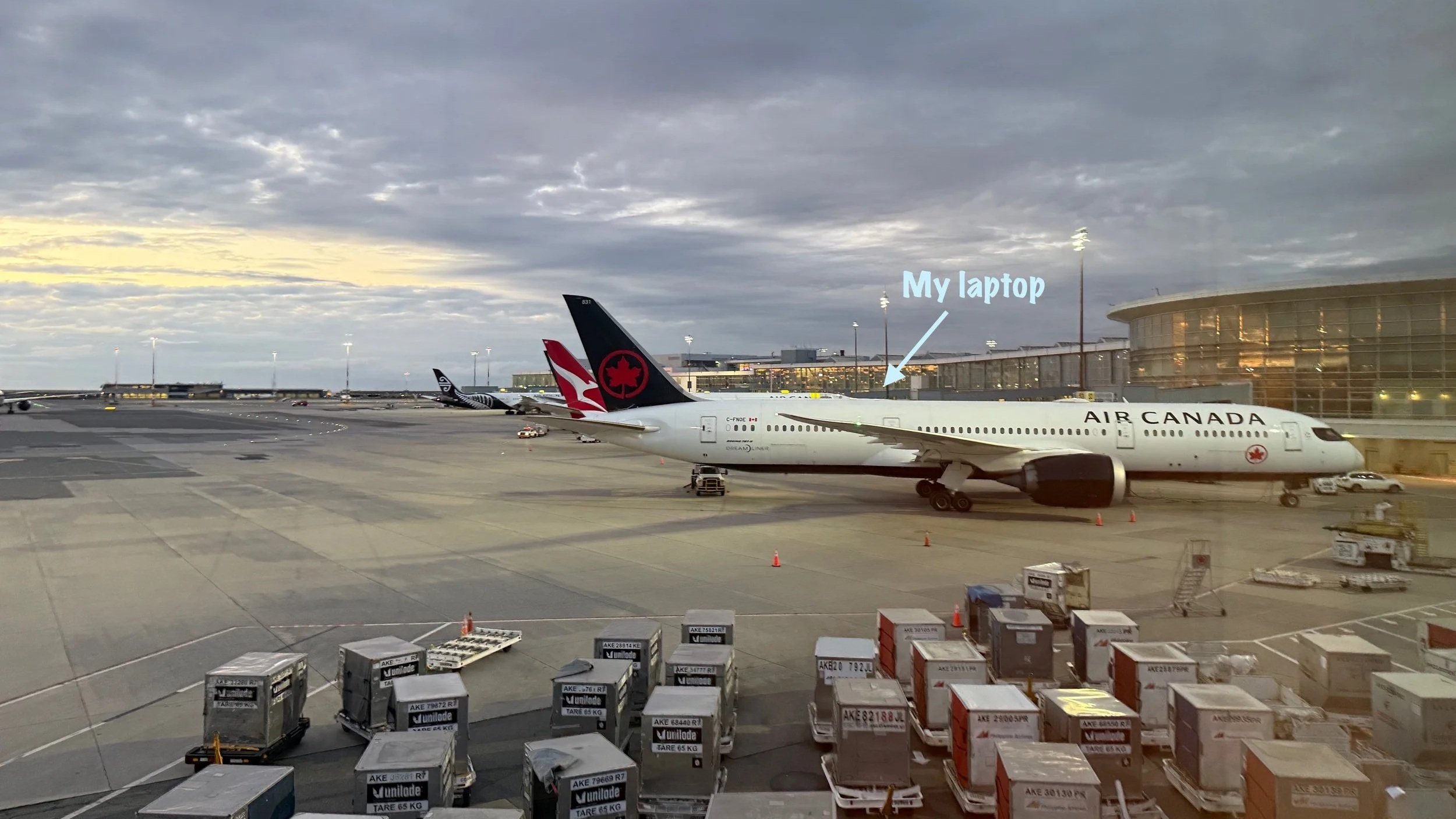
Seriously — I could actually see the plane I had just arrived on from the window of the lounge.
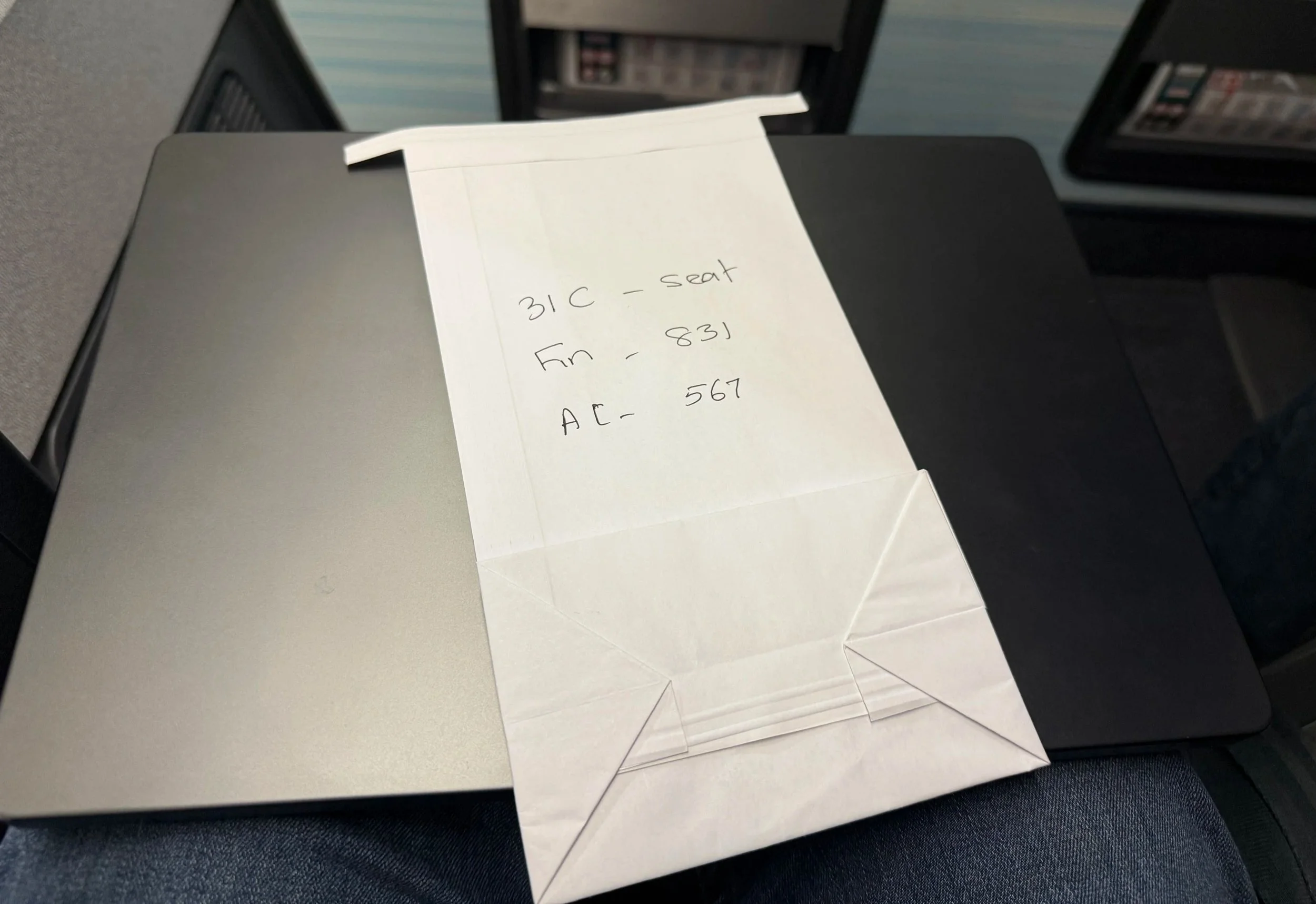
I rushed back to the welcome desk of the lounge to tell the staff what happened. They jotted down the details and got on the phone to try to help.
Unfortunately, airports are complicated places with lots of moving parts (and even airline staff get caught in phone trees trying to track down the right people). The fact that it was on the other side of a customs gate prevented the simple fix of just going and getting it. After 20 minutes of valiant effort, they gently suggested that I head to the gate, as my next flight was about to board. The most likely outcome was that they would have to ship it to me after I returned home from the UK.

At that point, there wasn’t much I could do. I headed to my gate and boarded my flight to London.
In reality, it wasn’t the end of the world. The slides for my upcoming talk were saved to Dropbox and, thanks to the miracles of modern phones, I had access to virtually everything I needed. Still…it was far from ideal.
A few minutes before takeoff, one of the flight attendants approached me and asked me to come with her. Standing outside the plane were two Air Canada staff members and a Canada Border Services officer holding my laptop!

I gratefully shook each of their hands and said thank you multiple times. All three smiled ear-to-ear. Even the stern-looking customs agent stood a little taller as she nodded proudly.
As I got back onto the plane, I couldn’t help but reflect on my last few days of travel. All of these people — and tens of thousands more — had likely spent the bulk of the past few weeks with people yelling and screaming at them. Directing frustrations at them over missed connections, rescheduled flights and countless other events that, while likely minor inconveniences in the grand scheme of things, at the time seemed overwhelming.
And yet every single person I encountered was professional and courteous.
That’s the thing about customer-facing roles. Nobody signs up to be yelled at. It’s not one of the perks highlighted in the job description. The vast majority of people I know who are customer-facing want to help. They want to solve problems and make people happy and be a part of something bigger. They want to be the hero of a lot of little stories — just like they were for me that day.
But in reality, customer-facing roles are often thankless endeavors. Both in air travel and in startups.
We heap praise on the engineers who create the thing, the sales execs who close the big deals and the marketers who come up with the viral campaigns. But behind the scenes are the field engineers who figure out how to deploy it and work around all the bugs, the embedded teams who keep the accounts stabilized, the customer support agents who respond to emails and phone calls at all times of the day, and the IT staff — that’s right, the IT staff — whose customers are inside the company but get no less frustrated when things go wrong.
Years ago, I hired a customer support specialist who had previously worked at 23andMe, the once-high-flying DNA testing startup. In recounting her experience there, she told me of her excitement at getting to work at a company on the bleeding edge of genetics. The opportunity to see the inside of one of Silicon Valley’s most prominent startups. And the reality of spending most of her shifts getting yelled at by people whose DNA tests brought unexpected or unwanted results.
People who discovered that their parents weren’t actually their parents. Their siblings weren’t actually their siblings. Their ethnicity wasn’t actually their ethnicity. They were angry and needed someone to yell at — and that was her (along with dozens of her colleagues).
I asked if the company’s leaders ever came by to thank them for their work. She just smiled.
In each and every startup, their are unsung heroes. The people who don’t often get the credit, but without whom the company simply wouldn’t operate. And if they’re customer facing, more than likely they spend a meaningful amount of their working hours as a receptacle for other people’s frustrations — whether or not there’s anything they can do about it.
So if you’re traveling this week, take an extra minute to stop and say thanks to the people helping make your travel a reality. Look them in the eyes, shake their hands, say their names and express your gratitude.
And when you get back to the office, do the same for everyone in your organization. Especially the unsung heroes. I promise, they’ll remember it.